


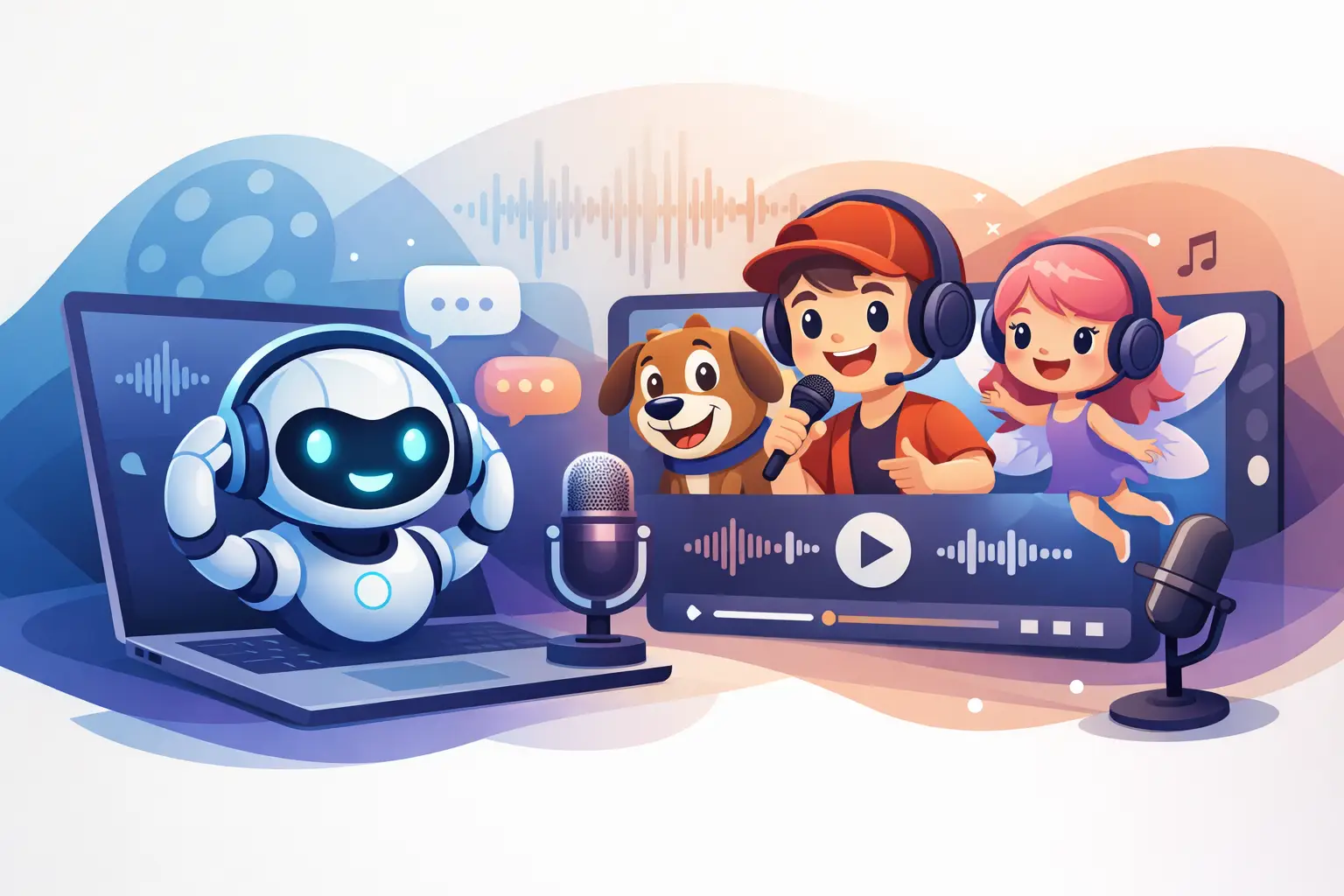
A cartoon voice can carry a weak edit further than a flashy transition ever will. If the read lands, viewers stay. If it sounds forced, repetitive, or too synthetic, they swipe. That is why creators looking for the best cartoon AI voices for videos usually are not just chasing something funny — they are trying to find a voice that fits a format, holds attention, and still sounds clean enough to publish at scale.
For Shorts, TikToks, gaming clips, and animated explainers, cartoon voices work best when they do two jobs at once. They add personality fast, and they simplify the story structure. A quirky narrator can turn a basic list into a character-driven bit. A mischievous voice can make a reaction clip feel like a recurring series instead of a one-off post. The trick is choosing the right style, not the most exaggerated one.
What actually makes a cartoon voice work on video
A good cartoon AI voice is not just high-pitched, silly, or overly animated. For creators, the real test is whether the voice stays usable across multiple uploads. You need consistent pronunciation, stable pacing, and enough emotional range to avoid sounding like the same joke on repeat.
That matters even more for faceless channels and automation-heavy workflows. If you publish every day, the voice has to feel like part of your brand. It should still sound clear under music, game audio, meme cuts, or fast subtitles. Many voices sound amusing in a demo and then collapse once you run them through a 45-second script with punchlines, pauses, and caption timing.
The best options usually share a few traits. They are stylized without becoming messy. They can stretch into character moments while still delivering information. And they generate quickly enough that you can test versions instead of settling for the first read.
Find your cartoon voice — play samples before you choose
Playful sidekick · chaotic comedy · villain · mascot · deadpan · adventure · cloned character
Browse cartoon voices →The 7 best cartoon AI voices for videos
The playful sidekick voice
The safest starting point for most creators. Upbeat energy, slightly exaggerated inflection, and a friendly tone that works for reaction videos, list content, and casual explainers. Flexible enough for gaming recaps, meme commentary, and storytime clips without boxing you into a niche — but delivery and script rhythm are what make it feel distinct.
The chaotic comedy voice
Louder, punchier, and built for shorter attention spans. Ideal for absurd humor, internet lore, skits, and cut-heavy edits where the voice is part of the joke. Best used as a format-specific tool — the more extreme the tone, the harder it is to sustain across a full series without becoming exhausting.
The sly villain voice
For storytelling, game lore, satire, and dramatic countdowns, the villain-style cartoon voice is underrated. It adds tension without needing full cinematic production. Works well for 'top mistakes,' fictional recaps, horror-lite content, and parody authority figures — but needs restraint to avoid sounding gimmicky.
The hyper-cute mascot voice
Common in anime edits, VTuber-adjacent content, cute product promos, and character-led social posts. Can feel instantly memorable when paired with bright visuals and fast on-screen text. One of the harder categories to use well — pronunciation issues or an artificial pitch can break immersion fast.
The deadpan cartoon narrator
Not every cartoon voice needs to bounce off the walls. Deadpan voices are often stronger for meme explainers, dry humor, weird facts, and understated storytelling. The contrast between a stylized voice and a flat delivery can be more effective than obvious comedy — and it layers cleanly over gameplay or kinetic edits.
The kid-like adventure voice
Works well for mobile gaming content, family-friendly animation, educational clips, and fantasy storytelling. Curiosity is built in, making it useful for hooks and scenario-driven intros. The caution: if your script includes stats or sales messaging, a childlike voice can make the content feel less trustworthy.
The custom cloned cartoon-style voice
For creators posting every day, often the strongest long-term option. Start with your own vocal identity and stylize around it for a more recognizable, scalable brand. A cloned voice can keep your pacing and speech habits while leaning more animated for specific formats — beating novelty presets for series consistency.
6 cartoon-style voices — hear them in action
These six represent the range available for cartoon content. Click play on any sample, then hit 'Use voice' to open it in the generator.




How to choose the best cartoon AI voices for videos
The right voice depends less on genre than on edit style. If your videos move fast, with lots of cuts and visual jokes, use a voice with cleaner phrasing and fewer exaggerated peaks. If your content leans on narration, you can push further into character.
Script length matters too. Some voices sound great for eight seconds and weak for 60. Test your actual format, not a sample sentence. A gaming creator might need a voice that can handle sarcasm and live reaction energy. A faceless storytelling channel may need steadier pacing, better sentence endings, and cleaner emotional turns.
You should also think about subtitle performance. Cartoon voices often rely on timing. If your platform supports export-ready captions with word-level alignment, your edit gets stronger because the voice rhythm and on-screen text reinforce each other. That is a bigger advantage than most creators realize, especially on Shorts where retention is won line by line.
What most creators get wrong
The biggest mistake is choosing the funniest voice instead of the most usable one. Novelty gets clicks once. Repeatability builds channels.
The second mistake is ignoring audio context. A cartoon voice does not exist in isolation. It has to sit with background music, sound effects, and compression from social platforms. A voice that feels expressive in headphones may sound harsh or muddy on phone speakers.
The third mistake is separating voice generation from the rest of production. Fast creation matters, but output readiness matters more. If you still have to clean timing, rebuild subtitles, and re-export everything somewhere else, the workflow slows down fast. That is why creators doing volume tend to favor tools that generate quickly and hand off finished assets cleanly.
When stock voices are enough — and when they are not
If you are testing a new format, stock cartoon voices are usually enough. They let you validate tone, see what your audience responds to, and produce quickly without a lot of setup. For experiments, speed wins.
If you are building a recurring series, a channel mascot, or a recognizable narrator identity, generic voices start to cap out. Viewers notice repetition. Your content starts sounding like everyone else using the same presets. That is the point where custom voicing or cloned narration becomes more valuable than sheer variety.
For agencies and small teams, there is another factor: handoff. If multiple editors need the same voice style every week, consistency matters as much as quality. A repeatable voice setup reduces revisions and keeps the brand tone intact across campaigns.
A better way to judge cartoon voice quality
Do not ask whether a voice sounds realistic. Ask whether it sounds watchable.
For cartoon content, realism is not the point. Timing is. Character fit is. So is how quickly you can go from script to final export without patching the same problems every time. The best cartoon AI voice for your videos is the one that supports your format, survives repetition, and still sounds clean after captions, cuts, and music are added.
If you are posting often, treat voice choice like part of your editing system, not just your audio. The creators who grow fastest are not always using the loudest voice. They are using the one they can turn into a recognizable series, over and over again.
What is the best cartoon AI voice for YouTube Shorts?▾
For YouTube Shorts, the best cartoon AI voice is one with clean phrasing and strong pacing rather than maximum exaggeration. Voices like the playful sidekick or deadpan narrator tend to perform well because they hold attention without overwhelming the visual edit. Test with your actual script length — not a demo line — before committing to a style.
Can I use cartoon AI voices commercially on YouTube?▾
It depends on the platform and plan. On Vocallab AI, Pro voices come with full commercial rights, meaning you can monetize your YouTube channel, TikTok, or client videos without attribution. Always check the licensing terms before publishing to ad-supported channels or selling branded content.
How do I make a cartoon AI voice sound less robotic?▾
Script formatting matters as much as the voice itself. Break long sentences into shorter ones, add natural pauses with punctuation, and avoid dense lists without rhythm breaks. Testing multiple reads of the same line and adjusting the script phrasing — not just the voice settings — usually produces better results than tweaking tone alone.
Is voice cloning better than using a stock cartoon voice?▾
Voice cloning is better for creators who want a consistent, recognizable identity across a series. Stock cartoon voices are better for testing new formats, variety-based channels, or content that benefits from switching character styles. Many creators start with stock voices and move to cloning once they find a format that works.
Do cartoon AI voices work well with subtitles and captions?▾
Yes — and caption sync is one of the most underrated parts of choosing a cartoon voice. A voice with consistent pacing generates cleaner timed captions. Platforms that export word-highlighted SRT files alongside MP3 audio save significant edit time, especially on Shorts and TikToks where captions directly affect retention.
Start with the right cartoon voice — free to try
Character voices, cartoon styles, and cloning options · MP3 + word-highlighted SRT · Full commercial rights on every Pro voice.
Near real-time generation · MP3 + word-highlighted SRT · No attribution required