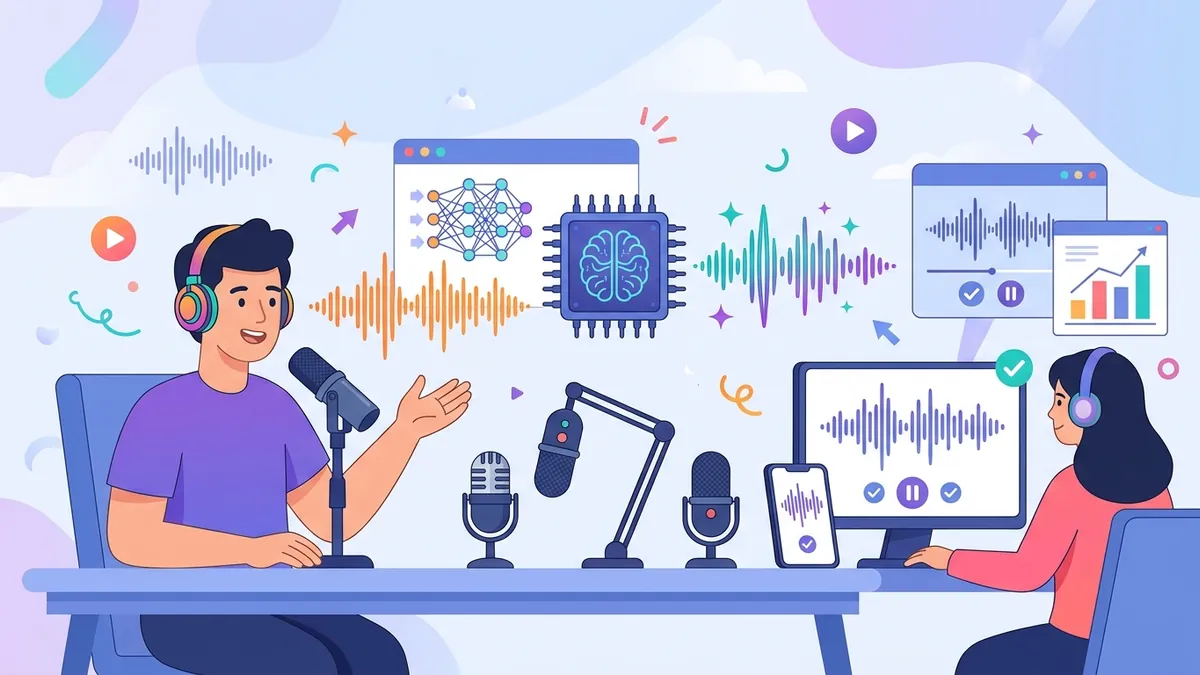
In the phone vs USB mic for voice cloning debate, the winner is whichever one sits 20 cm from your mouth in the softest room you own. A phone in a carpeted bedroom will usually give a cleaner clone than a studio condenser in a tiled kitchen, because the clone learns from everything in the recording: the echo, the fridge hum, the neighbour's TV through 1 thin wall.
So this isn't a gear review. We haven't run a mic shootout and we won't pretend to have numbers. What follows is how a clone is built from your sample, the 4 recording problems that do the damage, and a checklist you can finish in 10 minutes with whatever is already on your desk. If the length question is still open, how much audio it takes to clone a voice covers it separately.
What the clone learns from your sample
VocalLab asks for 15 to 30 seconds of clear speech, and 30 seconds is the recommended length. That's a small amount of data, which is why every second counts. The clone has no way to know the low rumble was a passing truck or that the metallic ring came from your bathroom tiles. It hears 1 voice with that ring on it, and it tends to carry the ring into every line you generate afterward, whether that's a 10-second intro or a 40-minute narration.
A bad sample doesn't fail loudly. You get a clone that sounds roughly like you, a bit boxy or a bit thin, and you blame the technology. Most of the time the fix is a better recording. Creating a clone costs 0 points on every plan, but the Free plan's single clone is a lifetime slot, so on Free it pays to get the take right before you submit it. Lite also keeps 1 clone, Pro keeps 10 and Max keeps 200.
Best mic for voice cloning: phone, USB or headset
All three can produce a usable sample. The differences are about how easy it is to hold a steady distance and how much of the room each one lets in. The table is reasoning about how the devices behave, not a test result.
| Mic | Where it helps | Watch for |
|---|---|---|
| Phone voice memo | Already in your pocket, close to your mouth, re-record in seconds. | Hand noise and drifting away mid-sentence. |
| USB mic on a stand | Distance stays fixed and you set the level once. | Condensers hear the whole room, and p and b sounds can pop. |
| Headset mic | A fixed mouth distance, so the room matters less. | Breath and lip noise up close; cheap ones sound narrow. |
Out of the 3, our pick for most people is the phone, propped up or held still, in the smallest soft room you have. A headset comes second because it fixes your distance for you. A USB mic comes third. It's excellent if you already own one, but buying one only for cloning isn't worth the money.
If you do own a USB mic, treat its sensitivity as a risk rather than a perk. A mic that picks up fine detail also picks up the laptop fan 40 cm away, and the fridge in the next room. Turn the gain down, point the back of the capsule at the noise, and listen before you commit to a take.
The 4 things that change a clone's quality
Room echo
Hard walls bounce your voice back a moment late, and the clone hears that as part of you. Record in a bedroom with a bed and curtains, or in a closet full of clothes. Hanging 1 duvet behind your head works better than it has any right to, and so does recording with your face 30 cm from an open wardrobe.
Background noise
Fans, air conditioning, the fridge, traffic and a keyboard all count. Switch off what you can, shut the window and close the door behind you. Cutting the noise is worth more than any upgrade. Music or a TV in the background is the worst case, because it can't be pulled apart from your voice afterward, and a quiet room is what our own clone-from-a-recording guide recommends.
Distance and level
Stay about a hand-span from the mic, which is 15 to 20 cm for most adults, and hold it for the whole take. Too close and you get boomy plosives. Too far and the room creeps in. Moving around halfway through is the quiet killer, because the first 10 seconds and the last 10 end up sounding like two different rooms.
For level, speak at your normal volume and keep the peaks comfortably below the top of the meter. A recording that's a little quiet can be raised. A distorted one can't be repaired.
How to record a voice cloning sample
Here are the 6 steps, in the order we'd do them. They assume a phone, but they're the same for any mic.
- Pick the quietest soft room. Carpet, curtains, a bed, clothes. Skip bathrooms and empty rooms.
- Silence the house. Fans off, notifications off, and airplane mode on so nothing buzzes mid-take.
- Fix your distance. Prop the phone against a stack of books, mic end toward you, one hand-span away and slightly to the side.
- Record 5 seconds first. Play the 5 seconds on headphones and listen for echo or hum. Change rooms before you change anything else.
- Take the real sample in one go. Keep the full 30 seconds as a single clip.
- Upload the original file. Heavy noise-removal apps can leave a watery edge that the clone then copies.
What to say for 30 seconds
Don't read a list of words. Talk the way you want the finished voice to sound, because that delivery is the baseline the clone carries into everything you generate. A flat read gives you a flat clone. A warm, lightly animated one gives you something to work with, and the voice cloning with emotion page explains why the sample sets the ceiling.
The math is short. At a conversational 150 words a minute, 30 seconds is about 75 words, roughly what you'd say introducing yourself at the start of a video. Budget 3 takes (1 to find the quiet, 1 to settle your pace, 1 to keep): 90 seconds of talking. Write the 75 words out beforehand if you tend to ramble, then read it as if you were talking to one friend, not a room. Warm up out loud for a minute first, because a cold voice sounds stiff and stiff is what gets cloned.
Keep your normal pace. Slowing down to be clear is tempting, and it gives you a clone that sounds like it's dictating. Then listen back before you upload. If a dog barks or you stumble twice, record again: take 2 costs 1 minute, and a muddy clone costs a lot more.
What an expensive mic won't fix
A better microphone can lower the electronic hiss of a cheap device and capture a fuller range. That's a real benefit, and it's small next to the 4 problems above. It won't remove echo from a room it's sitting in, and it won't make a mumbled, rushed or sleepy read sound alert.
It also doesn't change what a clone can do afterward. Limits on expression or accent, and the lack of a pitch control, come from the model and the sample, not the hardware. If you're about to spend money, spend it on soft furnishings first. 2 heavy blankets over a clothes rack cost less than any microphone and do more for the result.
The short version: Use the phone you have, in the softest room you have, one hand-span from your mouth, with the house switched off. Re-record until it sounds clean on headphones. That beats a well-reviewed mic used badly.
After the clone is ready
Generate a test script of 2 or 3 sentences before you commit to anything long. If the clone sounds boxy, go back to the room, not the mic. If it sounds fine, the turn your voice into an AI model walkthrough covers saving it and generating your first full script.
Not sure you want your own voice on the channel at all? Listen to a stock narrator such as this lucid male explainer voice first, then decide.
Frequently asked questions
Can I clone my voice with a phone?
Yes. A phone voice memo works as long as it holds 15 to 30 seconds of clear speech from a quiet, soft room, with the phone steady about a hand-span from your mouth. Thirty seconds is the recommended length.
Do I need a USB microphone to get a good voice clone?
No. Room echo, background noise, distance and recording level affect a clone more than the microphone does. A USB mic on a stand helps you keep a steady distance, but a phone in a quiet bedroom is usually enough.
How far should I be from the microphone?
About a hand-span, and the same distance for the entire take. Staying consistent matters more than the exact number, because a changing distance changes how your voice sounds inside one sample.
Can I use noise removal on a noisy recording before cloning?
Re-recording is better. Aggressive noise removal can leave a watery or thin quality that the clone copies. If you must clean a file, keep it light and listen on headphones before uploading.